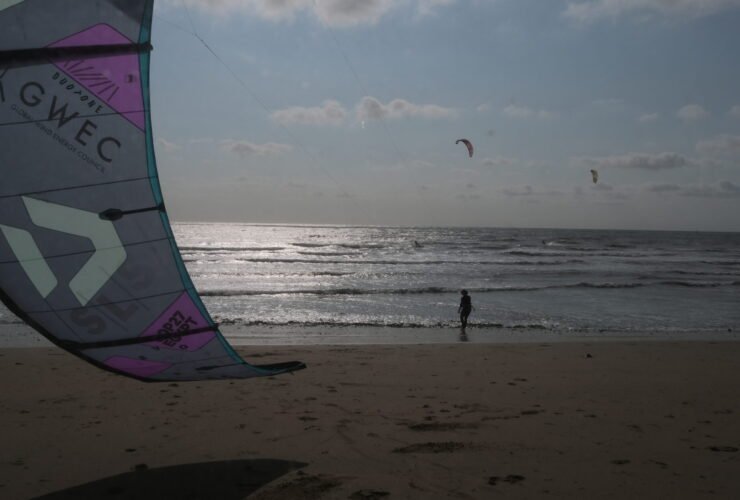
Kitesurfing has a reputation for being expensive, but that’s usually because people imagine they need brand-new gear and a full setup on day one. In reality, most UK riders start by:
- doing lessons first,
- buying a wetsuit that fits, and
- building a second-hand setup gradually as confidence grows.
If you take a phased approach (summer first, then winter upgrades), you can be riding independently for hundreds rather than “thousands and thousands”.
Quick summary: realistic starter costs (summer vs winter)
***Please note that these prices are estimates and only if you’re buying temporary kit that is budget or if second hand has been well used. Prices also depend on your size. Links and prices were correct at the time of writing.
| Item | Summer Setup Cost | Winter Setup Cost | Notes |
|---|---|---|---|
| Wetsuit | £15 (3/2) | £50 (5/4) | Budget suits are fine to begin in the right season |
| Wetsuit shoes / boots | £15 | £15–£30 | Thin shoes in summer, boots in winter |
| Gloves | — | £10 | Winter only |
| Helmet | £17.50 | £17.50 | All seasons |
| Hood | — | £10 | Winter only |
| Impact vest / buoyancy aid | £25 | £25 | Strongly recommended year-round |
| Harness (second-hand) | £30 | £30 | Comfort + fit matter most |
| Bar & lines (second-hand) | £120 | £120 | Prioritise condition + safety system |
| Kite – large (12m summer) | £150–£200 | — | Covers lighter winds |
| Kite – medium (9m winter) | — | £150 | For stronger wind days |
| Board (second-hand) | £100 | £100 | Twin-tip beginner board |
| Estimated total | £560–£615 | £620–£645 | Full riding setup (not lessons) |
Important: for lessons, you usually only need a wetsuit. Schools provide kite, board, harness and safety gear during training.
Where to buy second-hand kit cheaply (UK)
If you’re buying used, you want two things: choice and honest seller history.
These two Facebook groups are a great place to start:
Facebook Marketplace
Locally, the best bargains often come from the community. If you’re in East Kent, speak to EKKC riders and simply say:
“I’m a beginner, I’m on a budget, and I want something safe and forgiving to learn on.”
You’ll be surprised how many people have older kit they’ll sell cheaply (or even help you source), because they’d rather see a newcomer get into the sport than struggle.
What you need for lessons vs what you need to ride independently
This is where many beginners get it wrong.
For lessons
You generally just need a wetsuit that fits (and sometimes boots depending on the spot/season)
Everything else is provided. That’s why lessons are such a good way to “try before you buy”.
To ride independently
You need:
wetsuit + warm accessories for the season
a safety layer (impact vest / buoyancy aid + a way to contact help)
harness, board, kite, bar/lines, pump
That’s what the table at the top covers.
Wetsuits on a budget (and how to buy them sensibly)
Yes — you really can get a 3/2 wetsuit for around £15 from places like Argos, AliExpress and Temu, and in warm months it can be enough to get started.
The key trade-off is durability and warmth. Super-budget wetsuits can vary in:
seam quality (how quickly they leak)
zip comfort
neoprene stretch and longevity
For a beginner, that’s okay — because your goal is getting on the water, not buying “the perfect suit”.
If you’re starting in winter, the smartest budget move is often buying a 5/4 wetsuit around £50. A decent 5/4 can last years, and it makes the difference between enjoying winter sessions and constantly feeling cold and miserable.
Boots matter more than people realise in the UK. Even in summer, thin neoprene shoes keep you comfortable and protect your feet on shingle, shells, and cold sand. In winter, thicker boots are one of the best value purchases you can make.
Safety: the low-cost items that prevent high-cost problems
A beginner doesn’t need a pile of gadgets, but they do need a few basics that keep small mistakes from becoming big ones.
An impact vest or buoyancy aid at around £25 is one of the best value items you’ll buy. It protects your ribs, adds flotation, and helps conserve energy when you’re learning.
A waterproof phone case is also a genuinely practical safety item — not because you expect things to go wrong, but because you’re planning for the rare day when something does.
Helmets are optional, but many beginners feel more confident wearing one, particularly in gusty conditions or when body-dragging and learning board recovery.
Kite equipment: what beginners should buy (and what to avoid)
When you’re starting out, you want gear that is:
predictable
forgiving
easy to relaunch
stable in gusts
That usually means all-round / freeride kites, not high-performance or specialist designs.
A simple 2-kite setup for UK beginners
For many riders, the easiest budget quiver is:
12m for lighter summer winds
9m for stronger wind days (common outside peak summer)
Some riders prefer 8/10/12, but you don’t need to overthink this at the start — what matters most is buying something safe and suitable for your weight and local wind range.
Your numbers here are very realistic:
used 9m: ~£150
used 12m: £150–£200
used bar/lines: ~£120
used harness: ~£20
board: ~£100
The biggest beginner mistake is buying a kite that is:
too old and tired (no shape left)
repaired badly
missing safety features
not beginner-friendly
Which brings us to the most important part…
How to buy second-hand kite gear safely (beginner checklist)
If you do nothing else, do this.
1) Ask the seller direct questions (and don’t feel awkward)
Copy/paste this message:
“Hi! I’m a beginner and I’m buying my first kite on a budget. Can you confirm:
year/model
approx how many sessions used
any repairs (bladders, canopy, struts)
does it hold air overnight
is it a freeride/all-round kite
any issues with the valves or leading edge
can you share close-up photos of the canopy, leading edge and bridle points?”
Good sellers won’t mind. If someone gets defensive, move on.
2) Avoid “ancient bargains”
A kite that’s extremely cheap can be fine… but if it’s so old that:
the canopy isn’t crispy
it’s lost its shape
it has multiple patches
valves are failing
…it becomes a false economy. Aim for kit less than 5 years old.
3) Bars and lines matter
A used bar at £120 is reasonable, but check:
depower rope wear
chicken loop condition
quick release function (must work smoothly)
line condition (uneven length causes poor flying)
If you’re unsure, ask an experienced local rider to look at it.
4) Use the community
If you’re part of EKKC (or joining), ask someone to sanity-check what you’re about to buy. It can save you months of frustration.
Phasing your purchases across the year (the budget-friendly way)
A beginner doesn’t need everything in one month. The easiest plan is:
If you start in summer
Begin with:
cheap 3/2 wetsuit + summer boots/shoes
impact vest/buoyancy aid
a 12m kite (lighter winds)
Then as autumn arrives:
add a 9m
upgrade warmth (boots/gloves/hood)
consider a 5/4 if you’ll ride through winter
If you start in winter
Start with:
a 5/4 wetsuit + boots + gloves + hood
safety layer
a smaller kite (often 9m depending on your size and local winds)
Then in spring/summer:
add a 12m for lighter wind days
consider a cheaper summer wetsuit if you want comfort
This is how people keep costs sensible — you’re always buying what you’ll actually use next.
Optional extras (nice later, not essential now)
A GoJoe can help board visibility during the early days. A GoPro is fun, but it won’t help you progress as much as spending that money on warm kit, safe gear, or another lesson.
FAQ
Do I need to buy kitesurfing equipment before lessons?
No. For lessons you typically only need a wetsuit (and sometimes boots). Schools provide kite, board, harness and safety equipment.
Is it safe to buy kites second-hand?
Yes, if you buy carefully. Ask about repairs, air-holding, and inspect wear points. Many riders buy used for years.
What kite type should beginners look for?
All-round / freeride kites that are stable, easy to relaunch, and forgiving. Avoid specialist race or high-performance designs early.
Do I need two kites to start?
Not immediately. Many riders start with one kite and add a second size later as they ride in more conditions.
Should I buy a 9m and 12m, or 8m/10m/12m?
Both can work. The best choice depends on your weight and the winds where you ride. If you’re unsure, ask local riders or your instructor.
Are £15 wetsuits actually okay?
In warm months, they can be enough to start. The trade-off is durability and warmth. Fit matters more than brand at the beginning.
What’s the cheapest realistic budget to ride independently?
Using your prices and buying second-hand, many beginners can build a complete setup for roughly £560–£650, depending on season and kite price.
What’s the #1 beginner mistake when buying used kit?
Buying something unsuitable “because it’s cheap”. Cheap kit that doesn’t fly well slows progression and can cost more long-term but if you just want something to get started with low financial commitment, budget kit can be a good solution. The best thing to do is speak to the community on our Facebook group or to the school’s instructors. Even kiters getting ready to surf at a spot will often be happy to chat about what kit to buy and how to keep it affordable especially when starting out.
Likes:15